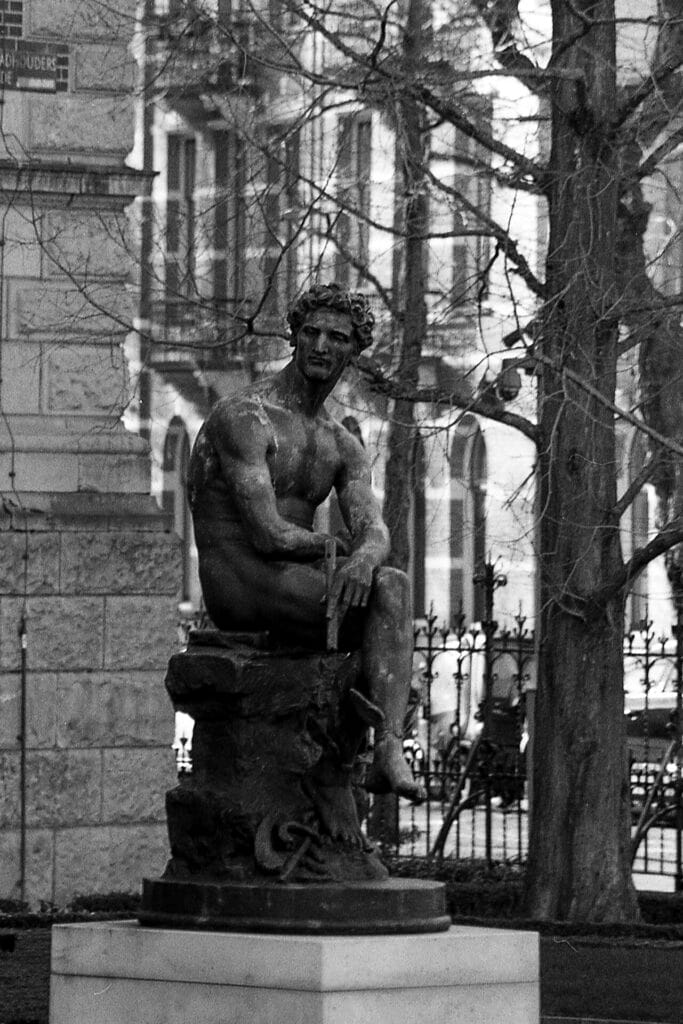
L’enfer c’est moi.
Bienheureux sont les pauvres d’esprit,
Gens de petit foi!
L’enfer c’est moi.
Bienheureux sont les pauvres d’esprit,
Gens de petit foi!
All the salvation teachings of this earth that I have come into contact with so far promise liberation from suffering, provided these doctrines are closely followed. All see as one of the most important sacrifices in the service of this liberation the containment of desire, the containment of abundance. What I have learned from this is that the latter is, in my opinion, one of the main causes of suffering.
In his short treatise "Answer on Jobs," Carl Gustav Jung talks about his idea that God omnipotent Jahwé, does not seem to know in advance that he lives from behind. I have arrived at a stage in my life that I understand this God better.
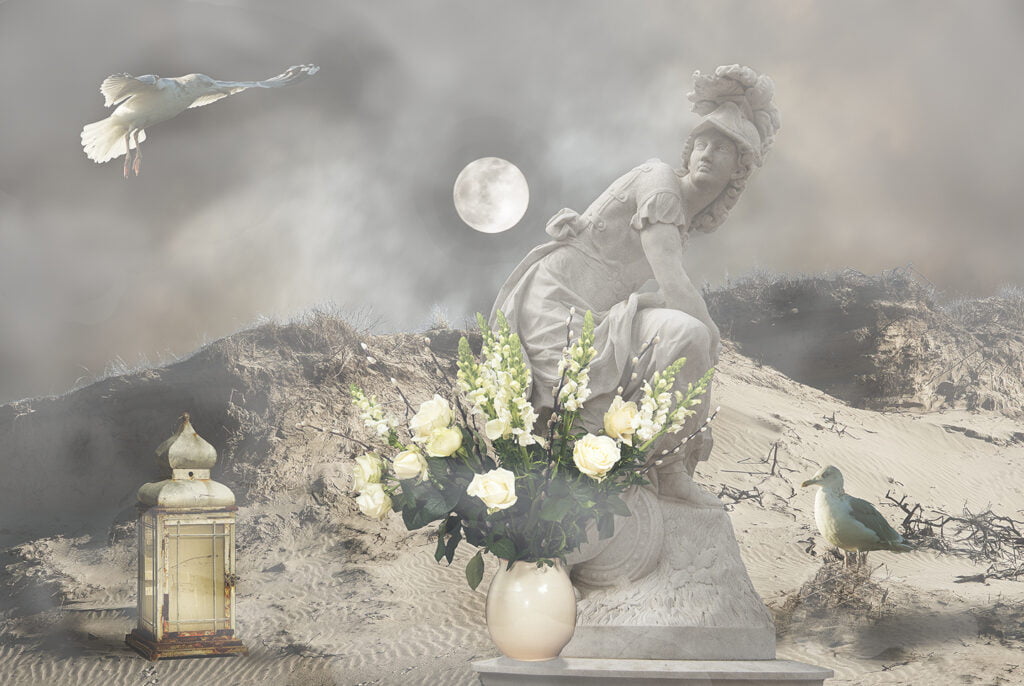
This week I came into contact with Durga (Doerga), a Hindu goddess and the goddess of anger, just to let her in. After reading about her, more about that later, I began to think about warrior goddesses, as I immediately started to call them. I don't have much knowledge of the many religions, but I'm going to try to tell you something here.
De godinnen Artemis, Pallas Athena en Aphrodite, met wat later de tegenhangers Diana, Pallas Athena en Minerva in Rome, schoten mij direct te binnen. Het valt mij op dat moment ook op dat er geen Christelijke godin van de woede is, zover ik weet tenminste. Het Christendom kent wel een aanzienlijke legerschare van heiligen en ik moet direct aan Jeanne d’Arc denken en hoe zij zich offerde in de Honderdjarige oorlog voor Frankrijk tegen Engeland. Met haar komt er ook een ingang in mijn tekst.
Jeanne was behalve een jonge vrouw met de nodige compassie en visioenen, een vasthoudend en eigenzinnig strijder, en ze was maagd. Het valt op dat dit op gaat voor alle bovengenoemde krijger godinnen. De Oud – Griekse godinnen van de jacht, wijsheid en liefde waren ook al onverschrokken strijders, en maagd. Ook Durga, wat de Ondoordringbare betekent en ook wel bekend als Devi Chandraghanta, is een echte onvervalste Moedergodin die verschijnt wanneer de destructieve krachten op aarde te grote vormen aan nemen. Ze kent natuurlijk net als haar collega’s geen angst en blijft haar spirituele kracht trouw, hoe zwaar het ook wordt. Op deze wijze verlicht zij het lijden. Door haar loyaliteit aan rechtvaardigheid is zij mede door haar vrouwelijke oer-energie niet te stoppen. Haar boodschap is: gebruik je kracht, kom voor jezelf op, laat je geen rad voor de ogen draaien en spreek je uit.
Doerga, in het Sanskriet दुर्गा), wordt ook vertaald als “zij die moeilijk benaderbaar is” en is belichaming van de woede van de goden. Zij wordt afgebeeld zittend op een leeuw of een tijger met tien tot twaalf armen met daarin haar regalia, die variëren van de lotusbloem, discus, bliksemflits en meerdere oorlogswapens waaronder een groot zwaard, waarmee zij tegen mannelijke demonen vecht, die de rust op aarde willen verstoren. Zij is begenadigd met een derde oog in haar voorhoofd. Zij blijkt een verschijningsvorm van Shakti, die voor haar volgers de Hoogste Werkelijkheid is. Zij is autonoom.
Het is voor mij een groot genoegen haar op mijn zoektocht tegen te komen en deze, weliswaar korte getuigenis van haar, het licht te doen zien.
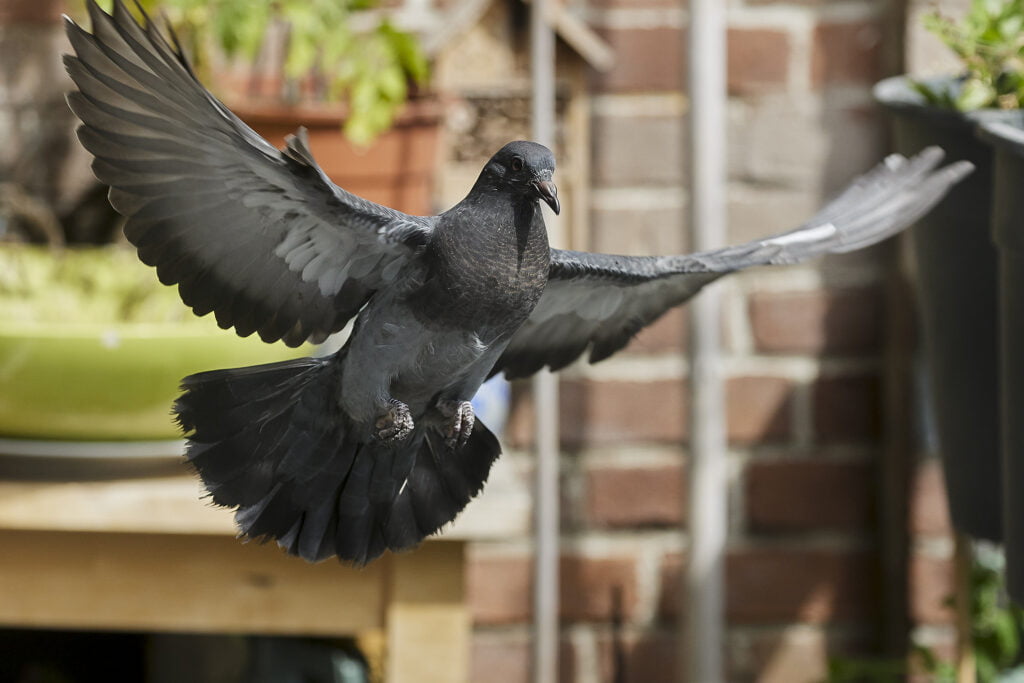
Symbols are an authentic imagination or creation of an unknown and not fully understood, with some secrets encased, idea, very briefly put. But what about the white dove as the symbol of the Holy Spirit? I am amazed all my life, at times, already at the use of this bird as a match to the soul of the trinity. As the fire and light of the rise of Western civilization.
Since last year I had a nest of two pigeons on my balcony and have followed the developments that took place closely, this question has only kept me more and deeper occupied. Honestly, I didn't only admit this nest because it was about the birth of animals, I actually hate pigeons, but also because I saw a beautiful symbolism in it, from the position on the spiritual path where I was then. I was even honored that I was chosen to make this sacrifice. I couldn't get on my beloved balcony for months and spent quite a few hours cleaning my balcony of the poop that the pigeons had left behind. Everyone around me advised me to continue and destroy the eggs. Even if it was only because the boy would come back this year to breed on a nest on my balcony. I was stubborn and allowed with due respect. Two of the three eggs have hatched. This year I have been hunting the two young pigeons, which are very recognizable, from my balcony since early spring, because they want to build a nest to breed eggs in them.
Unlike the pigeons I have a deep admiration for and perhaps some devotion towards the Holy Spirit. In my official, pagan eyes, the source, light and soul of at least the Christian idea of Creation. Today is Sunday, a good day to deepen this confusing symbolism for me. Where does this symbol even come from? Is it an authentic, natural and originally born image or is it more of a fiction of an overzealous church father?
After a short search on the internet, the following image emerges. The pigeon and especially the white pigeon symbolizes purity, purity and purity. It appears to be a sign of rebirth based on the love of God to man through Noah on his ark and the baptism of Jesus in the Jordan River by John the Baptist. In both records, the pigeon appears as a messenger of God and testimony of his love for his Son and earlier for his people Israel. In the Song of Songs, this bird depicts the ultimate happiness of man in the form of love to another when the young man in love wants to describe the girl of his dreams with a beautiful deeply felt metaphor. It seems that there are also one or more white pigeons released at weddings. Pigeons here symbolize love and loyalty. Pigeons seem to live monogamous and symbolize marriage. Many cultures link the pigeon to loyalty, love and also motherhood.
In ancient Biblical Israel, the pigeon is a beloved sacrificial animal, the idea then was that this bird does not possess a gall and is also affordable for poor people, because they are abundant in the land. Also the pigeon with an olive branch in her beak is a recurring image in the Bible, as in the story of Noah. The olive branch has a more extensive history as a symbol of peace. In ancient Greece, the olive tree was dedicated to the goddess Pallas Athens, the goddess of peace after she wins the battle for a piece of land from Poseidon as she appears with the most useful gift for that land for Supreme God Zeus.
Spiritually the pigeon can be seen as a messenger of supernatural guidance and pure energy. In ancient paintings, the pigeon is the symbol of the soul, and I would like to remember that in my eyes the Holy Spirit could be the soul of the trinity. Furthermore, I can also report that I find messages on the internet that say that when pigeons poop on your head, this brings luck. However, pigeons are also called flying rats because they are full of bacteria. I find pigeon poop, after the incessant and loud cheer the most annoying about pigeons. After the pigeons had vanished from my balcony and the poop had been removed, it only got worse with me physically, emotionally and spiritually.
My question as to whether it really is justified whether the white pigeon is a symbol of the holy spirit has not yet been adequately answered. I have found the reasons, but as far as I'm concerned, whether the flag really covers the cargo is not yet settled. The search will undoubtedly continue.

An hour later I took the picture above. To stay on the previous subject, the Passion, the state in Christian symbolism for zeal, well organized, cleanliness, courage, common sense, cooperation and of course sweetness. Furthermore, virginity is an attribute, because it used to be thought that bees did not reproduce via a form of coitus. The bee also stands for rebirth in the Christian context and is that not the theme of Christianity, if not all liberating religions and salvation teachings?
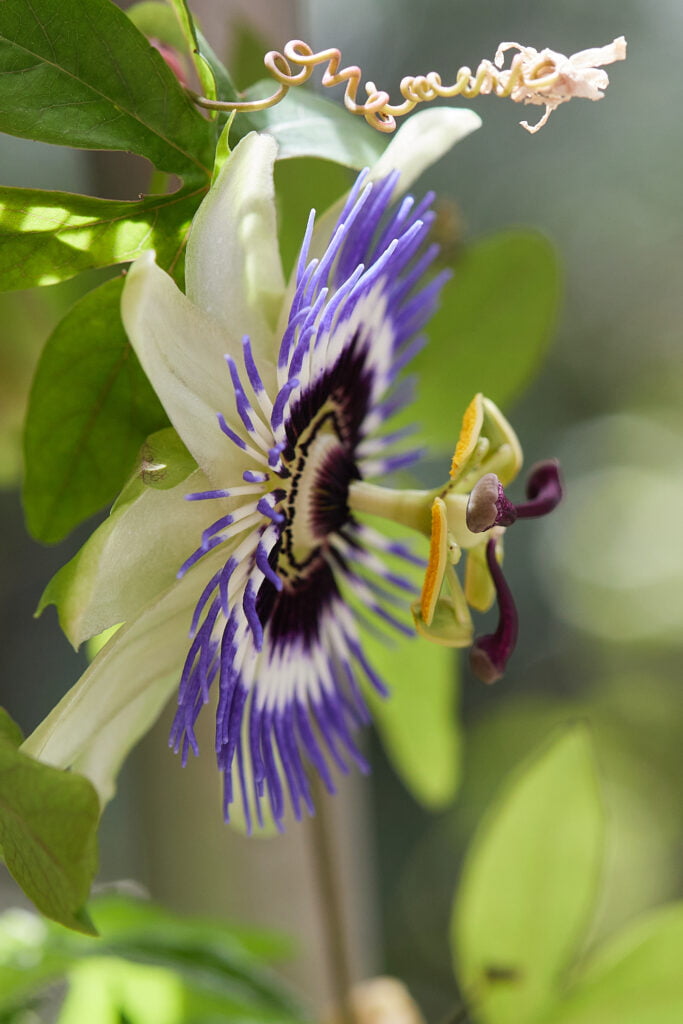
The passion flower, in Latin: Passiflora incarnata, is a beautiful flower to photograph on a sunny Sunday afternoon. Passio whose name Passiflora is derived means suffering, Flos flower. The missionaries from Spain, arriving in South America, see in the flower the symbolism of Christ's suffering. His agony is also called "the Passion" . The ten green leaves, on the back of the stalk towards the three pedigrees, would symbolize the ten apostles. The missionaries had already written off Judas and Peter for convenience. The three dark, wine-red pistils represent the three nails with which their Messiah was nailed to the cross. It is and of course remains a very beautiful flower that has been blooming on my balcony for years at the beginning of the summer.

